:
Выставки
Al-Hurufiyun: Artists of the Script, Умм-эль-Фахм, до 30 сентября
до 30 сентября
Расписание: Al-Hurufiyun: Artists of the Script, до 30 сентября
Подробнее: Al-Hurufiyun: Artists of the Script, до 30 сентября
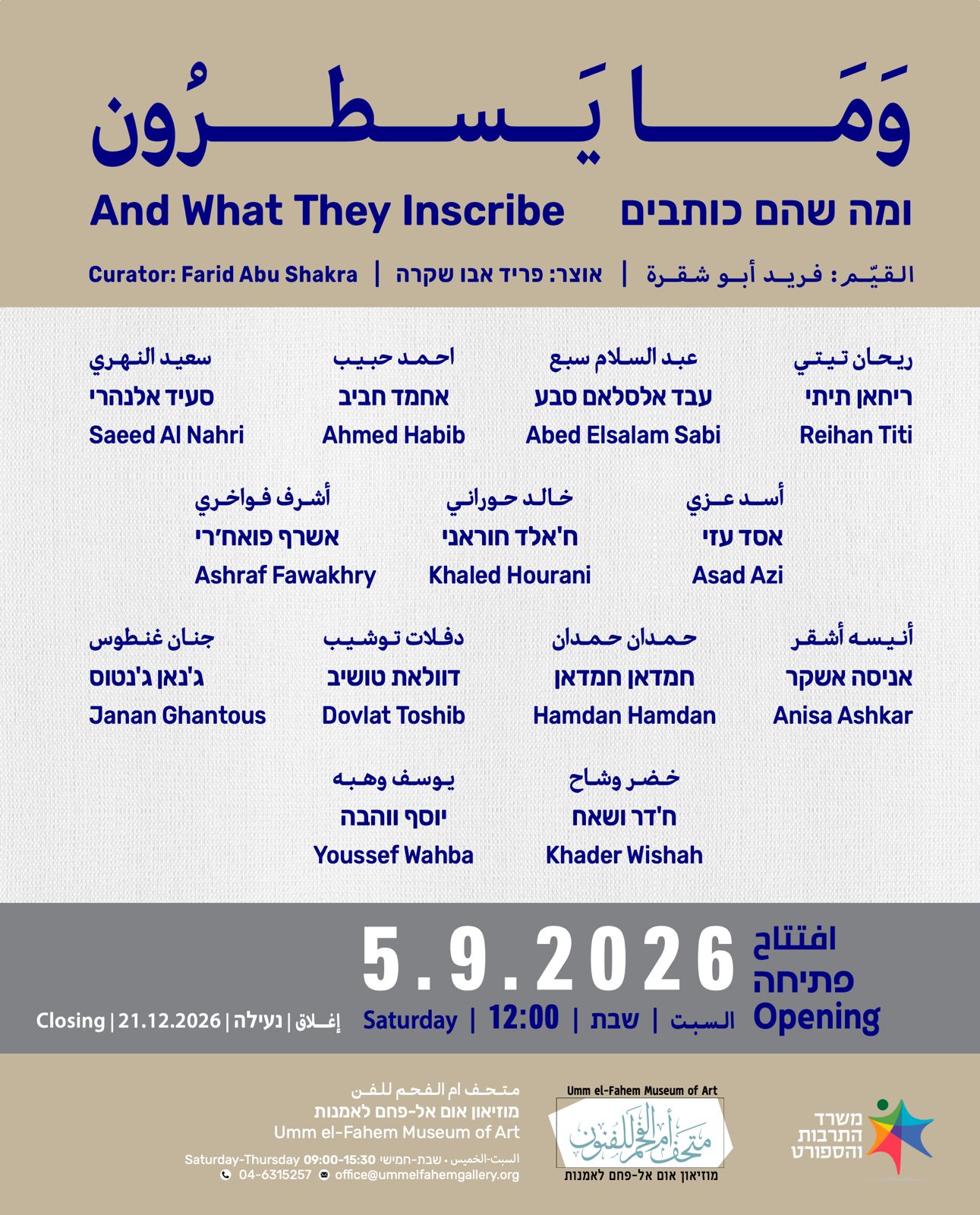
Al-Hurufiyun: Artists of the Script
Farid Abu Shakra
Today, calligraphers and the art of calligraphy no longer enjoy the well-defined status and image they once had. Calligraphers suffer from their ambivalent position within the dominant artistic hierarchy — one governed by the near-absolute standards and values introduced by the modern art revolution. This uncertainty confronts us whenever we search for a venue or space for an artwork — a museum, an exhibition hall, the wall of a house, or the cover of a book. What further compounds the confusion is the murky appreciation, a kind of vague respect or perhaps even love, that shows up from time to time and loudly declares that calligraphy is an authentic art form.
The artistic establishment has not allowed the calligraphers or Hurufi artists to develop. It has not invested resources in studying their works or in researching their conceptual and practical evolution. This lack of attention on the part of the establishment frustrates artists to no end, stifling their growth and impeding the evolution of handwriting as a subject, a school of art and thought, and a message.
Artists search for a style and a language that would reach the viewers and help them connect with their work. We have grown accustomed to works of calligraphic art, with their intricate lines and letters. Calligraphers have made us fall in love with their command of the letters, regardless of whether their texts are legible. The creativity and mastery that a calligrapher demonstrates across different styles bring the eye to a state of conviction and calm as it gazes upon the work.
As for the Hurufi artists, they use handwriting as a means of translating their texts and what they wish to convey to the viewer. I believe the success of the Hurufi artists stems from their command of both the visual arts and the styles of Arabic calligraphy. One cannot be a true artist without becoming proficient and learned in both fields.
One of the problems from which Arabic calligraphy suffers is the absence of a distinct method by which one becomes a calligrapher — a set path for a devotee of calligraphic art, from the very first step at the threshold of the master’s door, all the way to the moment when viewers pause to listen to the hidden meanings and allusions embedded within the lines of the letters in the work.